

Retinal Detachment
Retinal Detachment: A Sight-Threatening Emergency Requiring Immediate Retina Specialist Care
This condition occurs when the neurosensory retina separates from the underlying retinal pigment epithelium, cutting off its blood supply and leading to rapid, often permanent vision loss if not repaired promptly. Retinal detachment affects approximately 1 in 10,000 people annually, but the risk is significantly higher in patients with high myopia, previous retinal tears, posterior vitreous detachment (PVD), trauma, or certain ocular surgeries.
Time is critical: the longer the macula remains detached, the poorer the visual prognosis. Immediate evaluation and surgical intervention by a retina specialist offer the best chance of restoring and preserving vision.
What Is Retinal Detachment?
The retina is a thin layer of light-sensitive tissue lining the back of the eye. When fluid from the vitreous cavity seeps through a retinal break or tear and collects underneath the retina, it lifts the retina away from its normal position—like wallpaper peeling off a wall.
There are three main types:
Rhegmatogenous retinal detachment (most common) — caused by a retinal tear or hole
Tractional retinal detachment — caused by scar tissue pulling on the retina (common in advanced diabetic retinopathy or proliferative vitreoretinopathy)
Exudative (serous) retinal detachment — caused by fluid leakage beneath the retina without a tear (seen in tumors, inflammation, or certain systemic conditions)
Warning Signs – Seek Immediate Care
Retinal detachment often begins with symptoms of posterior vitreous detachment, but progresses to more alarming signs. Call a retina specialist immediately if you experience:
Sudden appearance of a large number of new floaters
Persistent flashes of light
A dark shadow, curtain, or veil spreading across your field of vision (from any direction)
Sudden or severe decrease in vision
What to Expect During Your Emergency Evaluation
We prioritize same-day or urgent evaluation for suspected retinal detachment. The assessment includes:
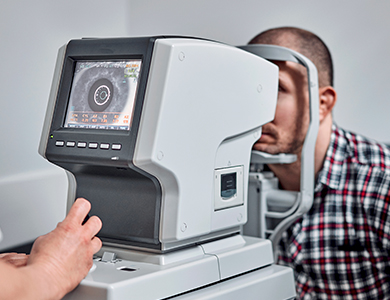
Dilated fundus examination to locate tears, extent of detachment, and macular status
B-scan ultrasonography when vitreous hemorrhage or other opacities obscure the view
Optical coherence tomography (OCT) to evaluate macular involvement when visible
Treatment Options
Surgical repair is required in nearly all cases of rhegmatogenous retinal detachment. The goal is to reattach the retina and seal all breaks. Common techniques include:
Pneumatic retinopexy
Scleral buckle
Vitrectomy (most common for complex or macula-off detachments)
Do NOT Delay
Retinal detachment is painless and progressive. Waiting can result in total blindness in the affected eye.
If you or someone you know is experiencing symptoms suggestive of retinal detachment, seek emergency retina specialist evaluation immediately. Contact our office or go to the nearest emergency facility with retina coverage right away.
Your vision is irreplaceable—early intervention saves sight.

Contact Us Let’s keep in touch!

Office Hours
- Monday 8:00am - 5:00pm
- Tuesday 8:00am - 5:00pm
- Wednesday 8:00am - 5:00pm
- Thursday 8:00am - 5:00pm
- Friday 8:00am - 5:00pm
- Saturday Closed
- Sunday Closed
Closed for lunch from 12 pm-1 pm
© 2026 Four States Retina | All rights Reserved | Accessibility Statement | Privacy Policy | Sitemap
Powered by:
